
Concurrent vs Parallel: A Practical Breakdown for Python, Java & C# Teams
Concurrent vs Parallel: A Practical Breakdown for Python, Java & C# Teams
If you have ever Googled "concurrent vs parallel", you have likely seen the standard one-line definition: concurrency manages many things at once, while parallelism runs many things at the same time. While directionally correct, that abstraction rarely helps a developer decide whether to use asyncio, Threads, or multiprocessing for a heavy data workload.
In this breakdown, we will unpack concurrent vs parallel logic for real-world applications. We will look specifically at how Concurrent vs parallel python scripts handle data, how Java concurrent vs parallel streams differ in the JVM, and how Concurrency vs parallelism C# patterns impact your infrastructure.
Use LycheeIP to test rotating proxies
What do concurrent vs parallel actually mean in simple terms?
Concurrent execution means a system makes progress on multiple tasks during overlapping time periods, while parallel execution means a system runs multiple computations at the exact same instant.
To put it plainly: concurrency is about structure and dealing with lots of things at once. Parallelism is about execution and doing lots of things at once.
How do concurrency and parallelism relate to multiple tasks and cores?
The main differentiator between these two concepts is the hardware resource they utilize.
- Concurrency creates the illusion of multitasking on a single core. The CPU performs context switching, jumping between multiple tasks rapidly. If Task A waits for a website to load, the CPU switches to Task B rather than sitting idle.
- Parallelism requires hardware with multiple processing units (multi-core processors). It splits multiple computations across these cores so they execute simultaneously. This is the only way to truly increase throughput and computational speed for heavy math or logic operations.
What is a concurrent vs parallel example you can picture instantly?
Think of a coffee shop to visualize a Concurrent vs parallel example.
- Concurrent (One Barista): There is one barista. They take an order, start the espresso machine, and while the coffee drips (I/O wait), they take the next customer's payment. They are handling multiple tasks by interleaving them. They are never idle, but they can only physically do one active thing at a time.
- Parallel (Two Baristas): There are two baristas. Barista A makes a latte while Barista B makes a cappuccino. Two drinks are being made at the exact same second.
For developers, concurrent vs parallel usually looks like this:
- Concurrent: A scraper sends 100 requests. While waiting for the server to reply, it sends 100 more.
- Parallel: A data processing pipeline splits a 10GB file into ten 1GB chunks and uses 10 CPU cores to process them all at once.
How do concurrent vs parallel models behave in Python, Java, and C#?
Understanding the theory is easy, but implementing it depends heavily on your language's runtime environment. Concurrent vs parallel python differs vastly from Java concurrent vs parallel due to memory management and compiler differences.
How does Concurrent vs parallel python differ for I/O vs CPU work?
In Python, the Global Interpreter Lock (GIL) is the defining constraint.
- Concurrent vs parallel python (Concurrency): Python excels here for I/O-bound tasks. Using libraries like threading or asyncio, you can manage thousands of network connections. The GIL allows only one thread to execute Python bytecode at a time, but it releases the lock during I/O operations (like waiting for a proxy response).
- Concurrent vs parallel python (Parallelism): To achieve true parallelism for CPU-bound tasks (like parsing HTML or image processing), you must use the multiprocessing library. This bypasses the GIL by spawning separate processes, each with its own Python interpreter and memory space.
If you use threads for CPU work in Python, you will not see a speedup; in fact, context switching overhead might make it slower.
How does Java concurrent vs parallel code use threads and streams?
Java concurrent vs parallel patterns are more robust because the JVM supports true multithreading without a GIL-like restriction.
- Concurrency: Java uses ExecutorService and CompletableFuture to manage thread pools. This is ideal for handling multiple tasks like incoming web requests or database queries.
- Parallelism: Java introduced Parallel Streams (.parallelStream()) and the ForkJoinPool. This allows developers to split a collection of data and process it across all available cores automatically.
In Java concurrent vs parallel scenarios, you rarely need to spawn OS processes manually; threads are sufficient for both I/O and CPU work, provided you manage shared state correctly.
How does Concurrency vs parallelism C# use async, TPL, and PLINQ?
The .NET ecosystem has distinct tools for Concurrency vs parallelism C#.
- Concurrency: C# relies heavily on the async and await pattern. This is not just syntactic sugar; it allows the thread to return to the pool while waiting for I/O, drastically improving scalability for web apps.
- Parallelism: For multiple computations that need raw speed, C# offers the Task Parallel Library (TPL) and PLINQ (AsParallel()).
When discussing Concurrency vs parallelism C#, remember: use async when waiting for the network, and use Parallel.ForEach when crunching numbers.
Use LycheeIP to test rotating proxies
Which workloads benefit more from concurrency vs parallelism?
Choosing the right approach depends on where your bottleneck lies. Throughput and computational speed are improved by different methods depending on whether you are waiting or working.
When should you prioritize throughput and computational speed?
- Prioritize Concurrency when your bottleneck is Network/Disk (I/O).
- Examples: Web scraping, calling APIs, reading from a database, microservices communication.
- Goal: Maximize utilization of wait time.
- Prioritize Parallelism when your bottleneck is CPU.
- Examples: Video encoding, encryption, complex regex parsing, machine learning inference.
- Goal: Maximize throughput and computational speed by using all hardware.
How do context switching and resource limits change the answer?
More threads do not always equal more speed. Context switching—the process of saving the state of one task to run another—consumes CPU cycles.
- In a Concurrent vs parallel setup, if you spawn 1,000 threads for a CPU-heavy task, the CPU spends more time switching between threads than actually working.
- In Concurrent vs parallel python specifically, context switching with threads on CPU tasks adds overhead with zero parallel gain due to the GIL.
LycheeIP Tip: For scraping, we recommend a high-concurrency model (to handle network latency) backed by a smaller parallel pool for parsing the data. This keeps your proxies active without choking your CPU.
How does async fit into concurrent vs parallel vs asynchronous thinking?
"Async" is a buzzword that often blurs the lines. To be precise, Concurrent vs parallel vs asynchronous represents a hierarchy of concepts.
What is the difference between concurrency vs parallelism vs multithreading vs async?
- Concurrency: The broad concept of handling multiple tasks in overlapping time.
- Parallelism: The hardware execution of tasks simultaneously.
- Multithreading: A specific software implementation where a process spawns multiple threads (can be concurrent OR parallel depending on hardware).
- Asynchronous: A non-blocking programming model. It is a form of concurrency that often uses a single thread (Event Loop) to manage tasks.
In the debate of Concurrency vs parallelism vs multithreading, async is the lightweight champion for I/O. It avoids the heavy memory cost of spawning a dedicated thread for every request.
How do event loops and async/await help with multiple tasks?
Event loops (found in Python asyncio, Node.js, and C#) allow a single thread to register a task, trigger an operation, and move on immediately. When the data returns, the loop picks the task back up.
This is distinct from Concurrent vs parallel CPU processing. Async does not make code run faster; it makes the wait more efficient. It is the gold standard for high-throughput scraping proxies and API gateways.
Use LycheeIP to test rotating proxies
Why does concurrent vs parallel design matter for scraping and automation teams?
If you are scraping at scale, the concurrent vs parallel architecture of your bot determines your monthly bill and your success rate.
How do different models change scraping speed, cost, and stability?
- Speed: A Concurrent vs parallel python scraper using asyncio can check 10,000 proxies in seconds. A synchronous script would take hours.
- Cost: Parallelism is expensive. Renting an 8-core server costs significantly more than a 1-core server. If your script is just waiting for HTTP responses, paying for 8 cores is a waste of money. You should use concurrency on a cheaper machine.
- Stability: Parallelism isolates failures. If one process crashes in a Concurrent vs parallel multiprocessing setup, the others keep running. In a single threaded async loop, one unhandled exception can crash the whole worker.
How can you mix concurrent vs parallel strategies safely?
The best architectures use a hybrid approach.
- Fetcher Tier (Concurrent): Use Concurrent vs parallel python (asyncio) or Concurrency vs parallelism C# (HttpClient) to fetch raw HTML. This tier is I/O bound.
- Parser Tier (Parallel): Push the HTML to a message queue (like RabbitMQ or Redis). Have a separate fleet of workers using parallelism (multi-core) to parse the JSON/HTML.
This ensures your heavy parsing doesn't slow down your high-speed fetching.
What are practical concurrent vs parallel examples you can start using today?
Let's look at code. These snippets illustrate the difference between Concurrent vs parallel example patterns in our three focus languages.
Concurrent vs parallel python snippet for scraping APIs
Here is how Concurrent vs parallel python looks when handling multiple tasks.
Concurrent (AsyncIO for I/O):
Python
import asyncio
import aiohttp
async def fetch_url(session, url):
async with session.get(url) as response:
return await response.text()
async def main():
urls = ["http://lycheeip.com/api/test"] * 10
async with aiohttp.ClientSession() as session:
# Runs concurrent network requests
tasks = [fetch_url(session, url) for url in urls]
results = await asyncio.gather(*tasks)
# This uses one core but handles waits efficiently
asyncio.run(main())
Parallel (Multiprocessing for CPU):
Python
from multiprocessing import Pool
def heavy_calculation(number):
return number * number ** 10 # Simulates CPU load
if __name__ == '__main__':
numbers = range(1000)
# Spawns separate processes to use multiple cores
with Pool(processes=4) as pool:
results = pool.map(heavy_calculation, numbers)
Java concurrent vs parallel example with streams
Java concurrent vs parallel is often a choice between ExecutorService and Streams.
Concurrent (ExecutorService):
Java
ExecutorService executor = Executors.newFixedThreadPool(10);
for (String url : urls) {
executor.submit(() -> {
// Blocks thread, but other threads keep running
downloadPage(url);
});
}
Parallel (Parallel Streams):
Java
List<Integer> numbers = Arrays.asList(1, 2, 3, 4, 5);
// Uses the common ForkJoinPool to use all cores
int sum = numbers.parallelStream()
.mapToInt(n -> heavyComputation(n))
.sum();
Concurrency vs parallelism C# example with async and TPL
Concurrency vs parallelism C# uses distinct keywords for distinct goals.
Concurrent (Async/Await):
C#
public async Task ScrapeAllAsync(List<string> urls)
{
var httpClient = new HttpClient();
var tasks = urls.Select(url => httpClient.GetStringAsync(url));
// Non-blocking wait for all network calls
string[] responses = await Task.WhenAll(tasks);
}
Parallel (Parallel.ForEach):
C#
var data = new List<int> { 1, 2, 3, 4, 5 };
// Blocks the calling thread but uses all cores for speed
Parallel.ForEach(data, num =>
{
PerformHeavyCPUWork(num);
});
How can you choose tools and patterns for your next concurrent vs parallel project?
Deciding between Concurrent vs parallel architectures boils down to understanding your limits: are you limited by the speed of light (network) or the speed of silicon (CPU)?
Simple checklist for picking concurrency vs parallelism vs asynchronous
Use this checklist to navigate Concurrent vs parallel vs asynchronous decisions:
- Is the task waiting for external data (DB, API, Proxy)?
- Yes: Use Concurrency (Async/Await, Futures).
- Why: You want to pause the task, not block the machine.
- Is the task performing heavy math or image processing?
- Yes: Use Parallelism (Multiprocessing, Parallel Streams).
- Why: You need throughput and computational speed from multiple cores.
- Do you need to share memory between tasks?
- Yes: Java concurrent vs parallel threads or C# threads are easier than Python multiprocessing.
- Are you trying to scrape millions of pages?
- Yes: Use Concurrency combined with a high-quality proxy network like LycheeIP to handle the connection volume.
What should data engineers and growth teams monitor over time?
Implementing multiple tasks logic is just step one. You must monitor:
- CPU Usage: If your concurrent app is at 100% CPU, you have likely accidentally made it CPU-bound or have too much context switching.
- Thread Count: In Java concurrent vs parallel apps, too many threads can exhaust memory.
- I/O Wait: If this is high, your throughput and computational speed are limited by the network, not your code.
Whether you are optimizing Concurrent vs parallel python scripts or enterprise Concurrency vs parallelism C# applications, the goal is the same: keep the hardware useful. Don't let cores idle, and don't block threads unnecessarily.
Comparison: Concurrent vs Parallel vs Asynchronous
| Feature | Concurrency | Parallelism | Asynchronous |
| Core Concept | Dealing with multiple tasks at once | Doing multiple computations at once | Non-blocking execution flow |
| Hardware | Can run on 1 Core | Requires Multiple Cores | Can run on 1 Core |
| Best Use Case | I/O Heavy (Network, DB) | CPU Heavy (Math, Parsing) | I/O Heavy (Web Servers) |
| Python Tool | threading, asyncio | multiprocessing | asyncio |
| Java Tool | ExecutorService | parallelStream() | CompletableFuture |
| C# Tool | Task, Thread | Parallel.ForEach, PLINQ | async/await |
| Key Risk | Race Conditions | High Resource Cost | Callback Hell / Complexity |
Use LycheeIP to test rotating proxies
Frequently Asked Questions:
1. What is the main difference between concurrent vs parallel?
Concurrency involves managing multiple tasks that make progress during overlapping time periods (often via context switching), while parallelism involves executing multiple computations simultaneously on different CPU cores to increase throughput and computational speed.
2. Can I use Concurrent vs parallel python approaches together?
Yes. A common pattern in Python is to use asyncio (concurrency) to fetch data from the web and then pass that data to a multiprocessing pool (parallelism) to parse and process the results without blocking the main event loop.
3. Why is "Java concurrent vs parallel" distinct from Python?
Java's threads map directly to native OS threads and the JVM does not have a Global Interpreter Lock (GIL). This means Java threads can achieve true parallelism on multi-core machines, whereas Python threads are forced to run concurrently (one at a time) due to the GIL.
4. How does Concurrency vs parallelism C# handle web requests?
C# uses an asynchronous model (async/await) for web requests. This frees up the request-handling thread to return to the thread pool while waiting for a database or API response, allowing the server to handle more concurrent users without adding more parallel CPU cores.
5. Does parallelism always improve throughput and computational speed?
No. If a task is small or strictly I/O-bound, the overhead of creating processes and coordinating data (context switching and serialization) can actually make parallel execution slower than a simple concurrent or sequential approach.
6. What is the relationship in "Concurrent vs parallel vs asynchronous"?
Asynchronous programming is a specific technique to achieve concurrency. All asynchronous operations are concurrent, but not all concurrent operations are asynchronous (e.g., manual threading). Parallelism is a hardware state where tasks run simultaneously, which is distinct from the software design of async.

Recommended Articles
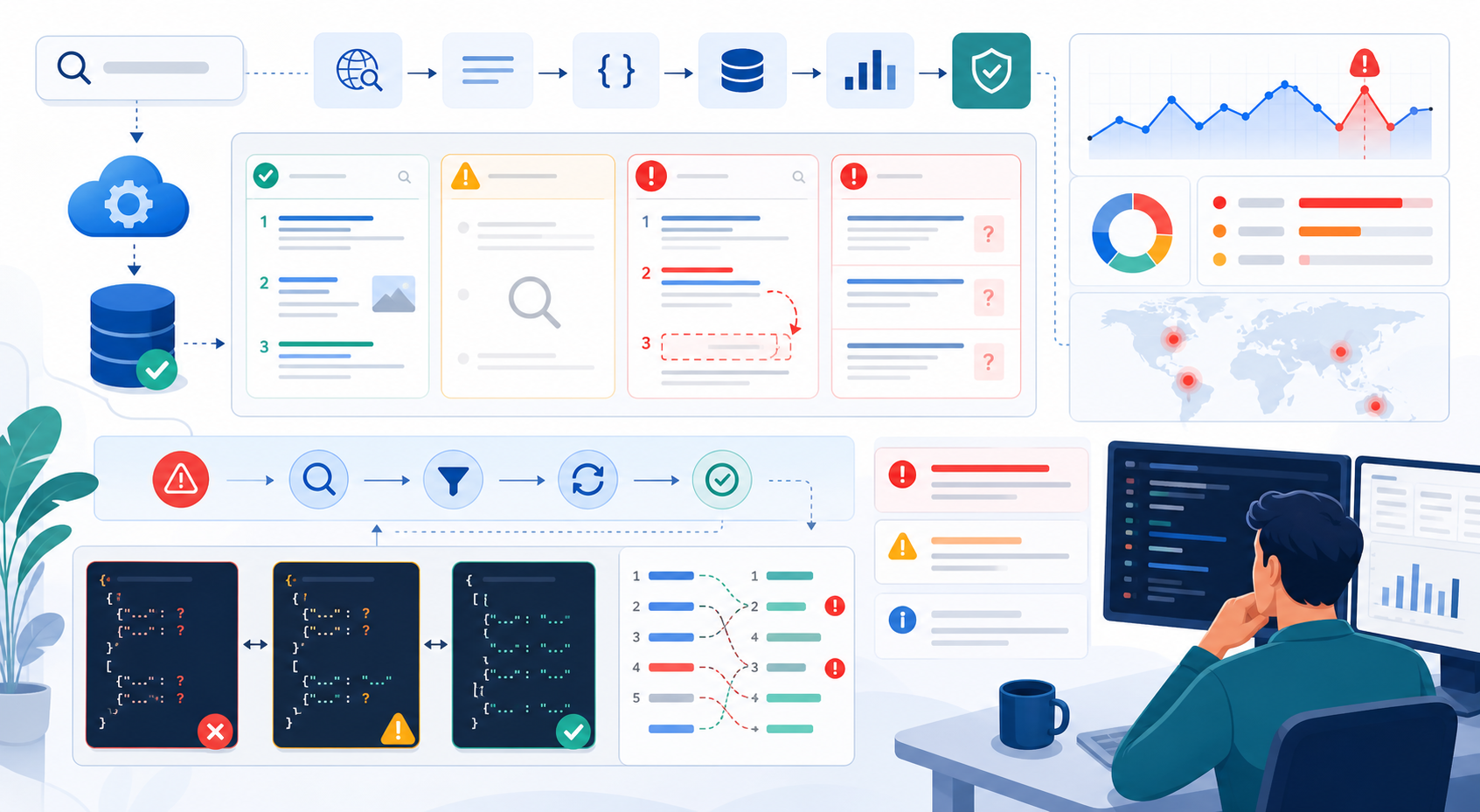
SERP API Troubleshooting: Fix Empty, Wrong, or Inconsistent Search Results
SERP API failures are not limited to obvious HTTP errors. A request can return successfully and still produce empty, incomplete, geographically wrong, duplicated, or misinterpreted search data. Production troubleshooting therefore has to separate transport problems from provider processing, SERP differences, and downstream parsing errors.
View Details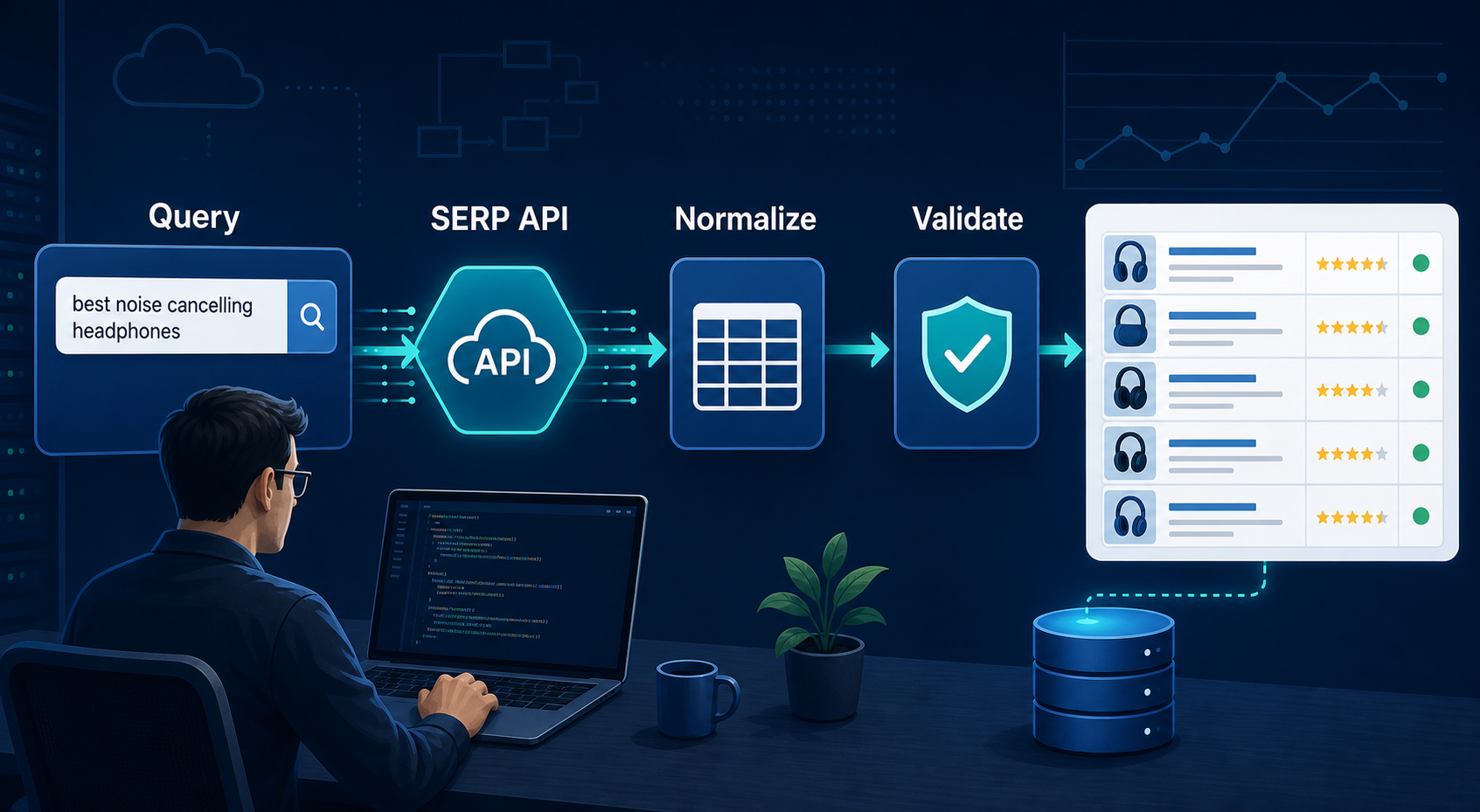
SERP API Python: How to Build a Reliable Search Data Pipeline
This guide shows a provider-neutral workflow for building that pipeline. It does not rank SERP API vendors. Instead, it focuses on the implementation choices that make a Python integration easier to operate, test, and migrate.
View Details
SERP Scraping API: How to Choose the Right Provider
Recommended Meta Description: Compare SERP scraping APIs by data coverage, localization, reliability, workflow fit, and cost structure, then choose and validate the right provider.
View Details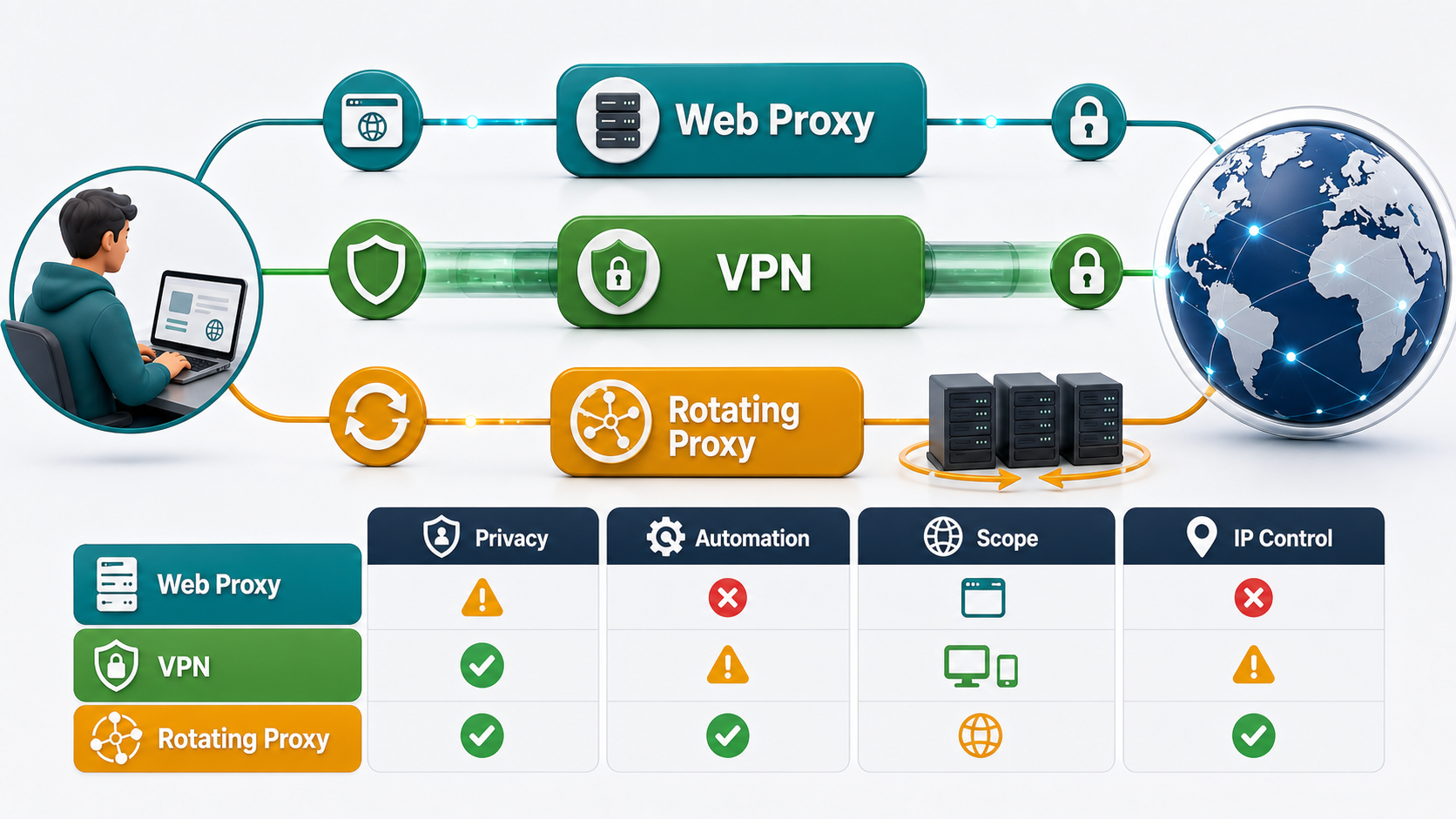
Free Web Proxy vs VPN vs Rotating Proxy: Which Should You Use?
Compare free web proxies, VPNs, rotating proxies, static proxies, and datacenter proxies by scope, encryption, IP control, automation, streaming, and account workflows.
View Details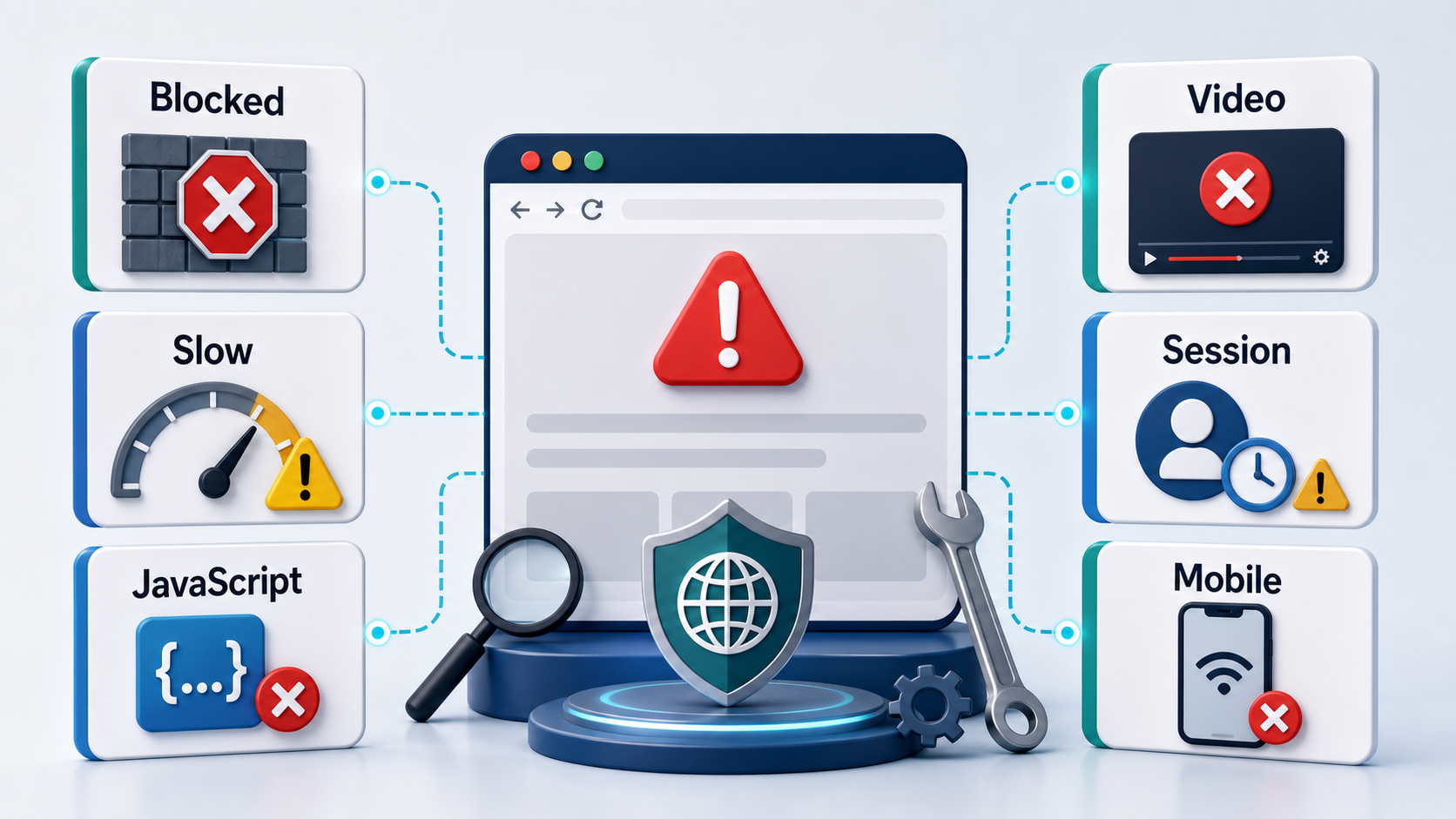
BlockAway Not Working? Fix Common Proxy, Video, and Access Problems
Troubleshoot BlockAway when pages are blocked, YouTube fails, JavaScript breaks, speed drops, sessions expire, or mobile access behaves differently.
View Details